If you’ve just arrived in Japan—or you’re preparing to—you’ll encounter the word hanko faster than you might expect. Signing a lease? You’ll need one. Opening a bank account? Hanko. Starting a new job? Almost certainly hanko. Understanding what a hanko is isn’t just cultural trivia; for anyone living or working in Japan, it’s genuinely practical knowledge that saves confusion at exactly the wrong moments.
This guide explains what a hanko is, why Japan still uses them, how they differ from a regular signature, and what types actually matter for foreigners. Whether you’re visiting for a week and want a meaningful souvenir, or you’ve just landed a job and your HR department is already asking about your inkan, this covers everything you need to know before you order.
By the end, you’ll understand the terminology, know which type of hanko fits your situation, and feel confident about getting one that actually works in Japan.
What a hanko is (and why it exists)
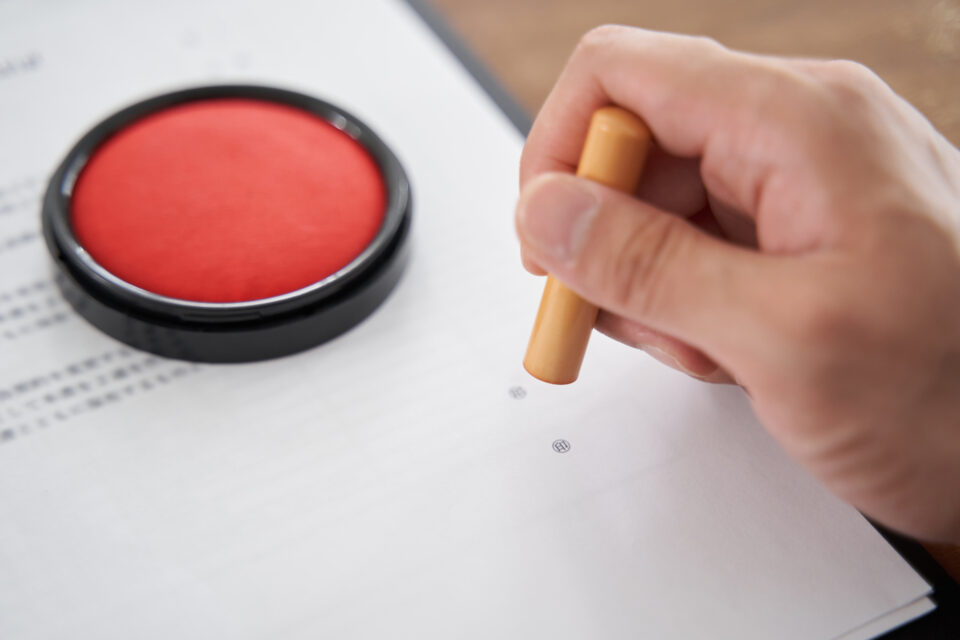
A hanko is a personal seal—a small cylindrical stamp, typically 10–15mm in diameter, carved with a name or design, that is pressed into red ink (shuniku) and used in place of, or alongside, a handwritten signature. In Japan, the stamped impression is called an inkan (印鑑), though the two words are often used interchangeably in everyday speech.
The practice dates back over a thousand years. Seals arrived in Japan from China and were initially reserved for emperors and officials. Over centuries they became embedded in administrative and commercial life, and by the modern era, stamping a hanko had become the standard way to authenticate documents—contracts, bank forms, official registrations, receipts, and more.
The underlying logic is actually straightforward: a physical stamp is harder to casually forge than a signature, and in a culture that placed enormous weight on formal documentation, a registered seal carried legal weight that a scrawled name simply didn’t. Even today, in a Japan that has made significant moves toward digital administration, the hanko remains common in daily life and is still legally required for many procedures.
For foreigners, the hanko can feel like an obscure formality at first. Then you try to open a bank account and the clerk slides a form across the counter with a small empty circle printed on it, and suddenly it becomes very real very quickly.
Hanko vs inkan vs signature
The terminology trips people up, so here’s a clean breakdown.
Hanko (判子) refers to the physical object—the stamp itself. Inkan (印鑑) technically refers to the impression the stamp leaves, but in practice most Japanese people use both words to mean the same thing: your personal seal. You’ll hear both and can use either without confusion.
A signature (sain, borrowed from English) is increasingly accepted in Japan, particularly in casual or commercial settings—credit card receipts, delivery confirmations, some private contracts. However, for anything involving government offices, banks, or formal employment paperwork, a hanko is often still expected or explicitly required. Offering a signature where a stamp is expected can stall a process entirely, especially at city hall or a regional bank branch.
The practical difference matters: a signature is personal to you but can be reproduced by anyone who studies your handwriting. A hanko, especially a registered one, carries institutional weight because it exists as a physical object that can be verified against an officially stored impression.
One common mistake among new residents is assuming Japan is moving entirely away from hanko. While the Japanese government has made efforts to reduce hanko requirements in some digital contexts, the reality on the ground in 2026 is that many institutions—banks, landlords, employers, local government offices—still ask for one. Preparing early is far less stressful than scrambling.
Common use cases for foreigners

Here’s where this stops being abstract. These are the situations foreigners actually encounter.
Moving into an apartment. Japanese rental contracts are multi-page documents, and nearly every one will have a space for your hanko. Even if your landlord or agency accepts a signature in some places, the official copy they keep will often still include a stamp somewhere. Showing up with a hanko signals that you understand how things work here.
Opening a bank account. Japan Post Bank, Shinsei, SMBC, Rakuten Bank—the requirements vary, but many Japanese banks still ask for an inkan when opening an account. Some newer online banks have dropped the requirement, but assume you’ll need one until confirmed otherwise.
Starting a new job. Employment contracts, onboarding paperwork, resident registration forms—hanko appears repeatedly. If you’re moving to Japan for work, ComfysCareer can help you find English-friendly jobs, and you’ll likely need a hanko for onboarding paperwork.
City hall registration. Registering your address (jūminhyō) and other municipal procedures sometimes require a stamp. Requirements vary by ward and by procedure, but having a hanko on hand removes one potential obstacle.
Receiving packages. A delivery driver may ask you to stamp a receipt rather than sign it. A basic mitomein (more on that below) is perfectly fine for this.
Types of hanko (mitomein, ginkoin, jitsuin)
Not all hanko are equal. Japan has three main categories, and using the wrong type in the wrong context causes real problems.
Mitomein (認め印) is the everyday hanko. It’s unregistered, typically mass-produced or simply carved with a common name, and used for low-stakes confirmations: signing for a delivery, initialing internal office documents, casual receipts. Many convenience stores sell pre-made mitomein for common Japanese family names. As a foreigner with a non-Japanese name, you almost certainly won’t find yours on a shelf—which is one reason custom ordering matters.
Ginkoin (銀行印) is your bank seal. It doesn’t need to be officially registered with the government, but it is registered with your specific bank, and it must match the impression on file every time you use it. Treat this one carefully—losing it means going through a formal replacement process with your bank. It’s typically slightly smaller than a jitsuin and kept separate from your everyday stamp.
Jitsuin (実印) is the registered seal. This is the serious one. You register it at your local city hall (yakusho or kuyakusho), receive an official certificate (inkan shōmei), and this seal is used for high-stakes legal documents: real estate purchases, vehicle registration, notarized contracts, some visa-related procedures. Foreigners who are long-term residents and dealing with significant legal or financial matters in Japan will eventually need one.
A common mistake is ordering a single hanko and trying to use it for everything. In practice, many residents keep at least two: a ginkoin for the bank and a mitomein for daily use. If you’re buying property or entering major contracts, a jitsuin registered at city hall becomes necessary.
Checklist: Which hanko do you need?
- Receiving deliveries, casual office use → Mitomein
- Opening or using a Japanese bank account → Ginkoin
- Rental contracts (basic) → Mitomein often works; confirm with your agency
- Major legal documents, property purchase → Jitsuin (registered)
- Moving to Japan for work onboarding → At minimum a mitomein; ideally ginkoin too
- Souvenir or gift → Custom mitomein, engraved with your name in katakana or kanji
How to order safely online
Ordering a hanko from outside Japan—or even within Japan if you don’t read Japanese—used to be genuinely difficult. Most traditional stamp shops operate in Japanese only, and the engraving choices (which script, which size, which material) require decisions most newcomers don’t feel equipped to make.
A few things to know before you order anywhere:
Script choice matters. Your name can be rendered in katakana (most common for foreign names), romaji (Latin letters), or—if you have a Japanese name or have chosen one—kanji. Katakana is the safest and most recognizable choice for foreign residents. It’s what Japanese institutions expect to see.
Size matters by use. Standard mitomein are around 10.5–12mm. Ginkoin are typically 12–13.5mm. Jitsuin tend to be 13.5–15mm or larger. Some banks specify size ranges—check before ordering.
Material is a personal choice, but quality matters. Cheaper plastic stamps wear faster. Hardwood, ebonite, and natural materials like buffalo horn or titanium last longer and stamp more cleanly. For a ginkoin or jitsuin, invest in quality.
Turnaround and shipping. If you need a hanko before a specific appointment—a lease signing, a bank visit—order with enough lead time. Confirm international shipping times if ordering from abroad.
HankoHub offers custom-carved hanko for foreigners, with worldwide shipping and guidance on script and sizing. The process is designed for people who aren’t navigating a Japanese-language shop interface—you input your name, choose your preferences, and receive something that actually works for Japanese administrative use, not just a decorative souvenir.
Common mistakes when ordering:
- Ordering the wrong size for bank registration (always confirm with your bank first)
- Choosing romaji script for official use (katakana is strongly preferred by most institutions)
- Buying a mass-produced stamp with a close approximation of your name (banks register your specific impression—get your own)
- Using the same stamp for bank and everyday use (if you lose it, you lose both)
- Leaving it too late before an important appointment
FAQ
Can foreigners use a hanko in Japan? Yes. There’s no restriction on foreigners owning or using a hanko. In fact, for residents, it’s often necessary. Your name is typically rendered in katakana.
Do I need to register my hanko? Not always. A mitomein and ginkoin don’t require government registration. A jitsuin does—you register it at your local city hall, and they issue an official certificate. The registration process requires proof of residence (jūminhyō), so you need to be registered as a resident first.
What if I lose my hanko? For a mitomein, order a replacement. For a ginkoin, contact your bank immediately—they’ll walk you through the re-registration process. For a jitsuin, you’ll need to go to city hall to cancel the registration and register a new seal.
Can I use a signature instead? In some contexts, yes. Increasingly in digital or commercial settings, a sain is accepted. But at banks, city offices, and in formal contracts, a hanko is often still expected. It’s safer to have one than to find out you need it when you’re already sitting across from a bank clerk.
Is a hanko a good souvenir? Genuinely, yes—particularly for someone with a real connection to Japan. A custom-carved hanko with your name in katakana or kanji is functional, personal, and meaningfully Japanese in a way that most airport gifts aren’t.
How long does a hanko last? A quality hanko carved in a durable material can last decades. The ink pad (shuniku) needs occasional re-inking, but the stamp itself doesn’t degrade with normal use.
Next steps

If you’re moving to Japan, starting a job, or simply want to be prepared for the paperwork reality of daily life here, getting a hanko before you need one is the right move. Scrambling to find one the morning of a lease signing or bank appointment is avoidable stress. HankoHub makes it easy to order a custom hanko with your name in the right script, the right size for your intended use, and shipping that reaches you wherever you are. Start there.